
What is Pitru Dosh?
Pitru Dosh is not a curse in the traditional sense; rather, it is a “karmic debt” or an astrological “imbalance” in the birth chart. It occurs when ancestors have departed with unfulfilled desires, suffered an untimely death, or when the living descendants have failed to perform the necessary Shradh or Tarpan rituals.
In a horoscope, this is typically identified when Sun (representing the father/lineage) or Moon (representing the mother/emotions) is afflicted by Rahu or Ketu, especially in the 9th house, which is the house of ancestors and fortune.
Common Symptoms of Pitru Dosh:
- Constant Financial Struggles: Earning well but facing sudden, unexplained expenses.
- Delay in Progeny: Difficulty in conceiving or recurring health issues with children.
- Discord at Home: Frequent arguments and a lack of harmony among family members.
- Marriage Hurdles: Significant delays or repeated obstacles in finding a suitable life partner.
- Lack of Mental Peace: Feeling a heavy sense of restlessness or “bad luck” following the family.
Why Trimbakeshwar is the Ultimate Destination for Pitru Shanti
While Pitru Dosh rituals can be performed in various holy cities like Gaya or Varanasi, Trimbakeshwar (near Nashik) holds a supreme status for this specific puja.
- The Power of the Jyotirlinga
Trimbakeshwar is home to one of the 12 Jyotirlingas. Unique to this temple is the Linga representing the Trinity: Brahma, Vishnu, and Mahesh. Since Pitru Dosh involves the transition of the soul, seeking the intervention of the Creator (Brahma), the Preserver (Vishnu), and the Destroyer (Shiva) simultaneously provides a complete resolution. - The Sacred Kushavarta Kund
The Godavari River, known as the Ganga of the South, begins its journey here. The Kushavarta Kund is considered the exact spot where the river reappears. Taking a dip here and performing the Tarpan rituals is believed to directly reach the souls of the departed, providing them with the “coolness” and peace they seek. - The Narayan Nagbali Connection
Trimbakeshwar is one of the few places authorized to perform the Narayan Nagbali Puja, which is often recommended alongside Pitru Dosh Shanti to resolve complicated ancestral issues and “Pitru-Rina” (ancestral debt).
Seeking the Right Guide: Pandit Milind Narayan Guruji
A ritual involving ancestors requires deep Vedic knowledge and a high degree of spiritual purity. Pandit Milind Narayan Guruji is a name synonymous with trust and expertise in Trimbakeshwar.
With over 10 years of experience, Guruji has mastered the intricate mantras required for Pitru Shanti. His approach is not merely ritualistic but deeply spiritual. He understands that every family lineage is different, and he meticulously guides devotees through the Sankalp, Pind Daan, and Tarpan, ensuring that the offerings are made with the correct intentions and pronunciation.
Under his guidance, devotees find clarity. He explains the significance of each step, transforming the ritual from a task into a profound experience of connecting with one’s roots.
The Ritual: Step-by-Step Procedure
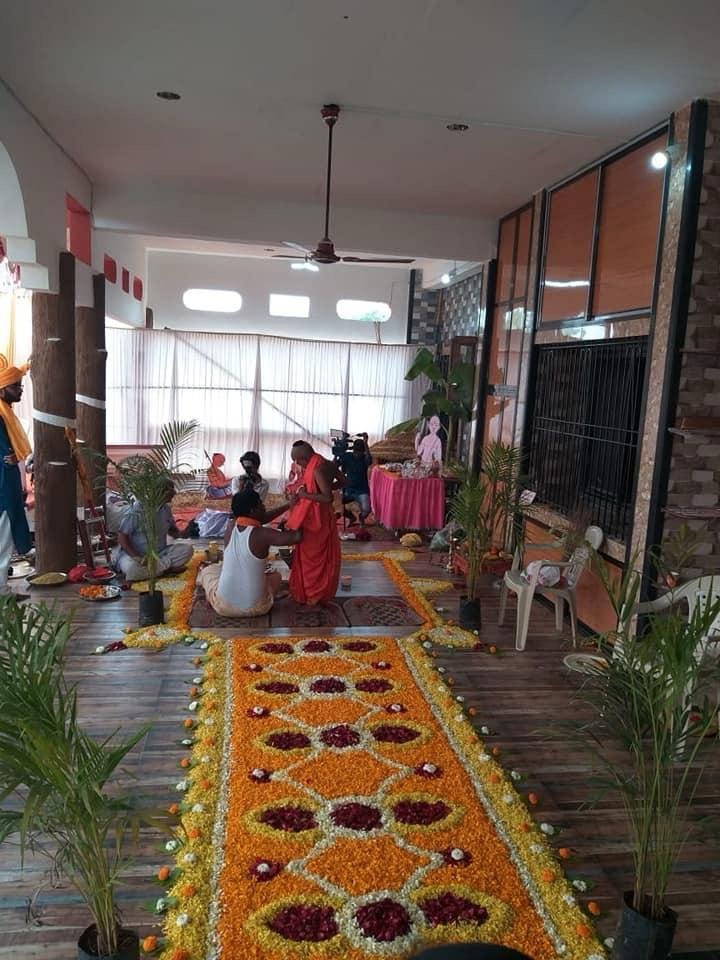
The Pitru Dosh Puja is a disciplined process that usually takes several hours. Here is what you can expect when you visit Trimbakeshwar for this ceremony:
- The Holy Bath (Snana)
The devotee begins by bathing in the Kushavarta Kund. This act is symbolic of shedding ego and worldly impurities, entering the ritual space with a clean heart and body. - The Sankalp (The Sacred Resolution)
Sitting with the Panditji, the devotee takes a Sankalp. You list the names of your ancestors (to the extent known) and declare your intention to seek their forgiveness and peace. If names are unknown, the ritual is performed for all “unknown ancestors” of the lineage. - Pind Daan
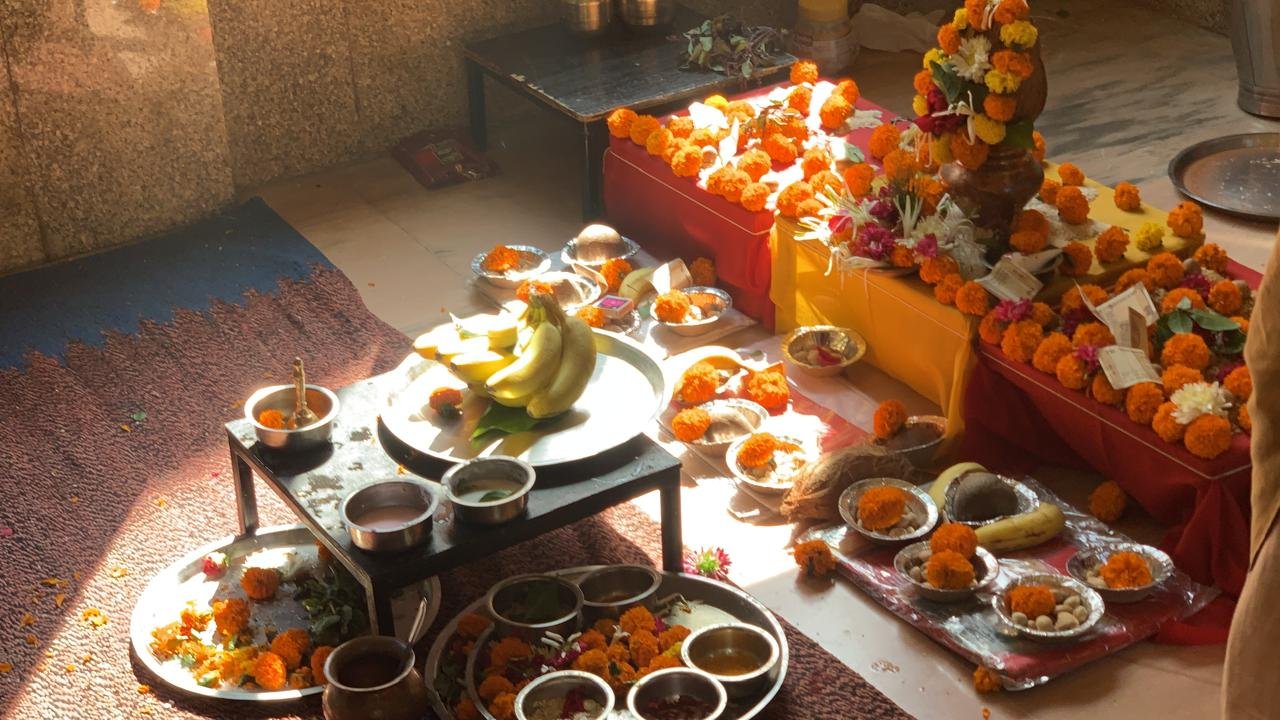
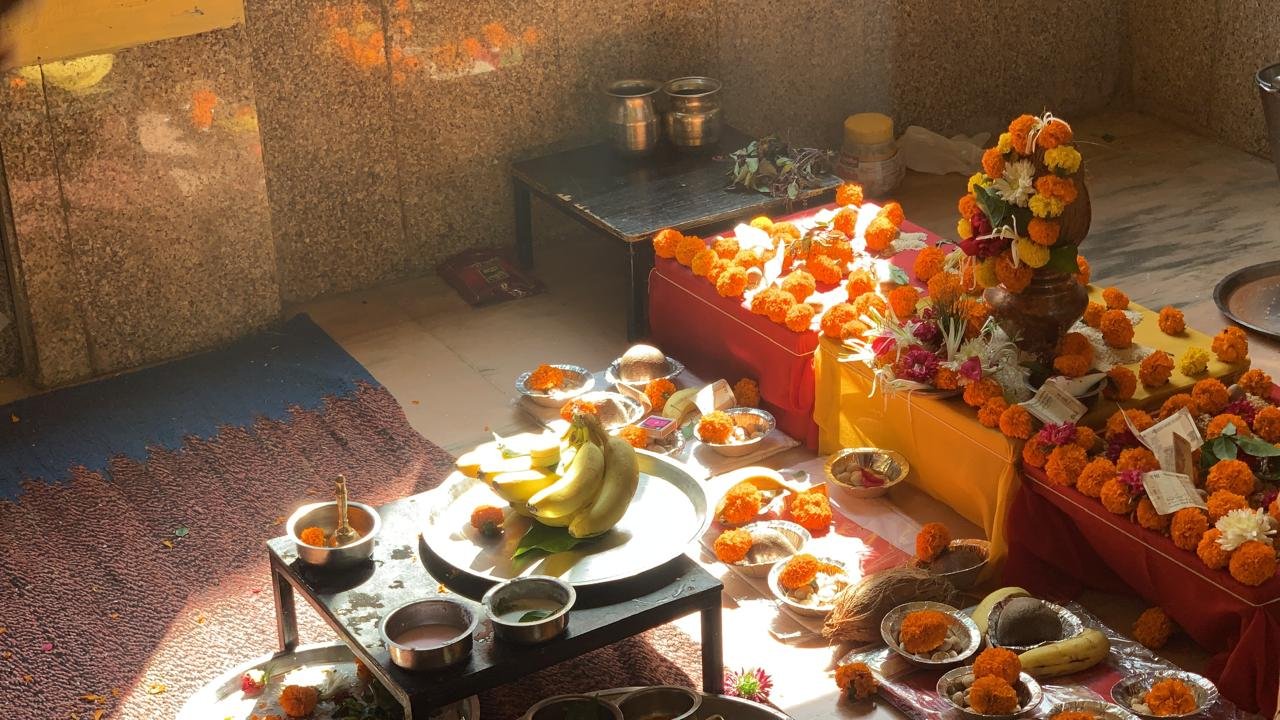
This is the most critical part of the puja. Small balls of cooked rice and black sesame seeds (Pindas) are offered. These Pindas represent the physical “food” for the souls in transit. This act signifies that the descendants are acknowledging and nourishing their ancestors. - Tarpan
Water mixed with black sesame seeds, milk, and honey is poured through the fingers. This “libation” is meant to satisfy the thirst of the departed souls. It is a gesture of profound gratitude. - Brahman Bhoj and Charity
After the rituals are completed, it is customary to offer food and dakshina to Brahmins and provide food to the needy. This acts as a “transfer” of merit (Punya) to the ancestors, helping them progress in their spiritual journey.
The Benefits: What Changes After the Puja?
When the ancestors are satisfied, they turn from being a source of “dosh” (affliction) to a source of “ashirwad” (blessings). Devotees often witness remarkable shifts:
- Growth in Lineage: Obstacles regarding children and the future generation often disappear.
- Financial Flow: Blocked wealth begins to circulate, and career stability is restored.
- Health and Longevity: The “heavy” energy surrounding the family lifts, leading to better physical and mental health.
- Spiritual Upliftment: A deep sense of peace descends upon the household, as the “karmic knot” has been untied.
Important Tips for Devotees
- Auspicious Dates: Pitru Dosh Puja is most effective during Pitru Paksha (the dedicated 16 days for ancestors), on Amavasya (New Moon), or during specific planetary transits.
- Attire: Men should wear a white Dhoti and Uparna. Women should wear a Saree or a traditional suit.
- Mindset: The ritual is about forgiveness and gratitude. Approach it with a sense of humility rather than fear.
- Prior Consultation: Contact Pandit Milind Narayan Guruji in advance. He can check your horoscope to determine the specific intensity of the dosh and suggest the best date and time for the ritual.
Conclusion Honoring Your Roots
We are the branches of a vast ancestral tree. If the roots are dry, the leaves cannot flourish. Performing the Pitru Dosh Puja in Trimbakeshwar is the equivalent of watering those roots. It is an act of supreme filial piety that echoes through generations.
By choosing an experienced guide like Pandit Milind Narayan Guruji, you ensure that your ancestral offerings are made with the utmost Vedic integrity. Don’t let the shadows of the past dim the light of your future. Visit the holy land of Trimbakeshwar, seek the blessings of your forefathers, and pave the way for a life of prosperity, peace, and protection.